



AIDED
ARTS
Jr. College
English
French
Gujarati
Hindi
History
Marathi
Philosophy
Political Science
Psychology
Sindhi
Sr. College
COMMERCE
SCIENCE
Jr. College
Sr. College
UNAIDED
B.Voc
Commerce
Senior College - Economics
 |
History of DepartmentThe Department of Economics is as old as the college which was established in 1948. It is a four member department. The department has been catering to students in the Commerce stream along with the Humanities stream since 1980. The first head of the department was Mr. Gajra followed by Mrs. Maya Mirapuri, Dr. Harver, Mrs. Adarsh Suri and Dr Anuradha Kalhan Siddique. The department is currently headed by Ms Sarita Jai Shankar. The department offers a full majors program in the final year to the cream of students enrolled in the BA program. The curriculum of each course has been designed to enhance the students’ theoretical and practical knowledge of the subject and to equip them for both further specialization in the field and employment. Our students have been securing admission at prestigious institutions like London School of Economics and Political Science, Harvard, University of Warwick, Barcelona Graduate School of Economics, Imperial, LBS, IIM etc to pursue further studies in Economics, Finance, and Management. On the placements front, our students have been picked up by companies like Google, RBI, Ernst & Young, KPMG, JLL, Edelweiss, Tres Vista, Zomato, Crisil, Royal Bank of Scotland and successful NGOs like Teach for India from campus and have thus made entry into the diverse fields of finance, research, social work, banking, start-ups, teaching, and civil services at the professional level.
About the DepartmentThe Department of Economics caters to students of both the Commerce and Humanities streams. It offers a full majors program in the final year of BA only to the best. The syllabus taught by the faculty includes nine papers of Economics at the BA level and three papers of Business Economics at the B Com level. The Economics department aims to create opportunities for its students to learn and showcase their skills, and to contribute to their overall development through the activities planned by the Economics Association which includes webinars, research paper presentation, quiz, debates, case study competitions, budget discussion etc. Arthanomics-2021, the flagship event of the Economics Department of Jai Hind College was organized on 14th and 15th August, 202. The 8th edition of one of India's biggest online business and economics festivals aimed to provide the participants with a unique platform - where new ideas and bold action meet, to tackle contemporary issues with creativity. Arthanomics 2021 was very well received with over 300 participants from across India and several entries from abroad. This included participants from reputed institutes like St. Xavier’s, Christ University, LSR (Delhi University), Ashoka University, HR College, and several others. The team got 37 sponsors including First Ventures, The Belgian Waffle Co., Boston Institute of Analytics, Cafe Condi, and a diverse list of highly qualified judges on board. We are grateful to the support received by all. http://jaihindcollege.com/events/college_festivals.html The Contrarian, the department publication, primarily envisioned as an annual magazine for expressing diverse views and thought provoking articles has transgressed beyond being a magazine. By using a variety of platforms such as Instagram, Youtube, Spotify, Google Podcasts, Anchor and its own Website it has expanded its readership globally. We have a team of 35 writers (Jai Hind students and non Jai Hind students) including 3 international writers. For the first time this year content was published daily – between June 2021 and January 2022 131 articles and 90 microblogs have been published. We also introduced an exclusive masterclass series: EDvantage, and held 3 interactive and informative workshops of 4 hours each, conducted by professionals with a good experience. Topics covered:
|
 |
|
Faculty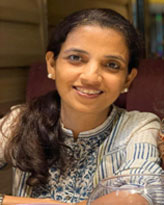
Name: Sarita Jaishankar
Designation: Assistant Professor, HoD and Academic Head Qualification: M.A. (Economics), Delhi School of Economics Specialization: Mathematical Economics, Macroeconomics Experience: 14 years 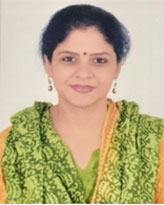
Name: Vaidehi Dhamankar
Designation: Assistant Professor Qualification: M.A, M.Phil, Gujarat University Specialization: Labour Economics Experience: 13 years 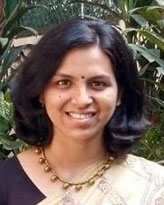
Name: Vibhuti Gunjal
Designation: Assistant Professor Qualification: M.A (Economics), Pune University PGDBA Finance Specialization: Development Economics Experience: 4 years |
|
|
Syllabus |
|