About BMS
As a programme, Bachelor of Management Studies (BMS) was started by the University of Mumbai in 1999. Jai Hind College being one of the first colleges in Mumbai to have started it has constantly been in the forefront of evolving and developing in every sphere of BMS.
The program is for three years and six semesters. It comprises of 40 courses inclusive of Research Dissertation which the student has to pursue in the final year of the program. As an undergraduate Management programme, which is looked up to by the students as a repertory for MBA as well as Entrepreneurial training, BMS’ curriculum is contemporary and its emphasis on practical aspects of Management along with theory is well appreciated. Known for its illustrious record of accolades and transforming young, energetic students to suave and smart graduates, Jai Hind BMS is continuing its legacy forward as another year progresses. With the recent grant of academic autonomy, a 60-40 marking system has been implemented wherein 40 marks requires field work experience, internal work and communication and is a part of continuous assessment; whereas the remainder 60 marks apply to application based learning and is semester end examination.
We strive to see each and every student of ours become a part of a generation of successful businessmen, entrepreneurs, and then so much more....
Faculty
Dr. Rakhi Sharma: Head of Department
MBA, PhD (UGC NET- JRF), LLB
Specialisation: Marketing, Finance & Entrepreneurship
Email id: rakhi.sharma@jaihindcollege.edu.in
Message from HOD:
The Department of Management Studies can best be described as an ever-evolving, forward-thinking group of highly qualified individuals. Each one bringing to the table, imaginative ideas, and unhindered zeal to ensure that the students are polished into well rounded, motivated citizens. A key factor that highlights the uniqueness of the department is our fundamental belief in the fact that real learning comes from real life. Our goal is to allow the students to experience different aspects of the world and create a firm base regarding the different subjects required to fulfil their ambitions, and in doing so, the student are often required to do various projects which may include field visit or conducting a survey.
It is our vision towards creating a holistic environment, where creative ideas are nurtured, and innovation celebrated, that helps each student realize their potential.
We understand the importance of using case studies and application-based learning and recognize that the students need to prepare for a future which would be vastly different from our present. Consequently, a prime decision, that has been taken by us is, to actively encourage skill-building. Therefore, we view it as an opportunity, to learn new skills with the students, and use those skills to further help the students reach new heights. These skills relate to different fields of study and include problem solving, logical reasoning, innovative thinking, Digital marketing, Risk Management, to name a few. The guest lectures, as well as the interactive master classes, enable the students to learn from others' experience and gain insight from the mentors.
Our support and knowledge has allowed many students to establish startups, where their true passions interact with their experience, to create an establishment where they can exercise exactly what they study. Our students have launched startups in various fields ranging from the real estate sector to digital marketing. Taking initiatives and participation in different competitions and college clubs is actively encouraged, which allows the students to engage with a diverse set of peers and experience the power of peer-based learning. The recognition that our family expands with every new batch, helps us to always earnestly aspire to be there for them, whenever they seek our guidance or support. We hope to pass on the torch of passion to every student and will always continue to nurture talent, with the hope of creating a better, brighter tomorrow.
Ms. Shilpa Jaiprakash More
Assistant Professor
M.A. (Economics)
Specialisation: Econometrics
Ms. Upasana Loya
Assistant Professor
Chartered Accountant; B.Com (Accounting and Finance)
Specialization: Accounts and taxation
Visiting Faculty:
The sessions are conducted by various visiting faculty and guest faculty for different courses of the program.
Sr. No |
Name |
Course |
Qualifications |
Current Employment with designation |
Relevant Experience in years |
Area of additional expertise |
Remark |
1 |
Ms. Adarsh Suri |
International Finance, Managerial Economics, Wealth Management |
MA in Economics from Mumbai University |
Visiting Faculty |
30 years |
Economics & International Finance |
Retired VP, Jai Hind College, Commerce, retired HOD, Economics Dept. Jai Hind College |
2 |
Azmeen Kasad |
Busines Law, Industrial Law |
LLB.LLM |
Owner, Aazmeen Kasad & Law Practice |
16 years |
Corporate Law |
Corporate attorney with substantial in-house legal experience; Member-Consumer Complaints Council of the Advertising Standards Council of India |
3 |
Jaimit Doshi |
Retail Management, International Marketing |
MBA |
VP-Kotak Securities |
17 years |
Marketing |
Strong expertise in leading and implementing consumer led strategic projects; Winner-Digital Marketer of the Year (Insurance) IAMAI 2016; Angel Investor/ Advisor to start-ups to help fine tune their strategies |
4 |
Kishu Daswani |
Busines Law, Industrial Law |
LLB, LLM |
Corporate lawyer, Visiting Faculty |
20 years |
Legal Research, Conflict Negotiation |
Global Peace Index Ambassador;Accredited as a trained mediator by Bombay High Court; Member of Law:Review, Reforms & Rationalisation Committee of IMC |
5 |
Rahul Munot |
International marketing, Sales & Distribution Management |
CFA, CFP, BMS |
Director & Cofounder |
9 years |
Certified Financial Planner |
Head, International Business at Trilok Steel Industries. Skilled in Business Process, Enterprise Risk Mgmt,Internal Audit, Risk Assessment & Mkt. Research |
6 |
Yash Chandiramani |
E commerce & Digital Marketing, Brand Management |
BMS |
Founder- Admatazz |
4 years |
Digital Marketing & Brand Management |
Best College going entrepreneur of the country, Mentor-Start ups at D2XCL Ventures to create digital and operational strategies |
7 |
Ritesh Mehta |
Corporate
Communicat-ions & Public Relations |
ISB |
AVP - Corpo-rate Comm-unication at SBI |
12 years |
Corporate
Communica-tion and
Public
Relation |
Covered corporate
developments like
Infosys Restructuring,
Satyam Scam,
Managed and executed communication
strategies of SBI, RBI,
SEBI, BFSI |
8 |
Archit Kejriwal |
Customer Relationship Mgmt. |
BMS |
Founder - Career Insight |
9 years |
Marketing |
Director, Career Insight |
9 |
Smita Padwal |
Business Communica-
tion, Principles of Marketing |
MBA, Nottingham University U.K., BBA - Deakin University Australia |
Visiting Faculty |
10 years |
Marketing |
Brand Manager, TATA Himalayan Water,
Legal Intern; involved
in Policy Welfare & worked for renovating and refurbishing women’s washrooms in police station |
10 |
Harsh Desai |
International Marketing, Service Marketing |
Masters in Policy, LLB, Mcom |
Founder & Partner - Tilt Shift Media |
8 years |
Marketing |
Chief Creative Officer & Senior Partner at Tilt Shift Media LLP;makes creative content driven campaigns for brands like Siyaram’s, Accenture, Uber, Asian Paints, Instarem, Anand Rathi Wealth Mgmt etc. |
11 |
Bhupali Naik |
Media Planning |
MMS Mktg |
Group Head - Sales Strategy & Planning Zee Enterta-
inment |
15 years |
Media planning, Pricing Strategies |
Pricing strategy for broadcast channel; media planning; programming strategies in the entertainment sector |
12 |
Hemal Shah |
Innovative Financial Services, Commodities & Derivatives Market, Wealth Management |
MBA |
Trainer - Stock market private limited |
10 years |
Stock market |
Director, CHL Stockconcepts Pvt. Ltd; Arbitrage and Options Trading Head |
13 |
Maithli Goradia |
Principles of Marketing, Customer Relationship Management |
Diploma in Pattern Making from Central Saint Martins, BMS |
Founder |
4 years |
Marketing |
Chairman & Designer at Maithili Goradia(Indian Textile & Apparel Label) |
14 |
Girishma Kanuga |
Customer Relationship Management |
BMS |
Consultant, Ernst & Young |
3 years |
Marketing |
Consulted various clients w.r.t. risk validation, internal audit reviews, indepth BARC analysis |
15 |
Vibhav Parikh |
Strategic Financial Management |
BMS, CFA |
Visiting Faculty |
5 years |
Finance |
Investment Professional & Edu-Tech Entrepreneur |
16 |
Aditya Shah |
Business Ethics & CSR |
BMS |
Visiting Faculty |
2 years |
Finance |
Founding Partner at Qian Financial Services LLP |
17 |
Munawar Patankar |
Information Technology In Business- I & II |
MCA |
Visiting Faculty |
10 years |
IT |
Expert in Computer Programming and Computer Graphics; Visiting faculty for at Andrews, Sydenham, Wilson College |
18 |
Jinal Shah |
Consumer Behaviour, Rural Marketing |
MMM (Gold), M.Com. |
Visiting Faculty |
8 years |
|
Co-ordinator, BMS-SIES College; Content developer for Marketing, advertising and branding books published by Pearson Publication |
19 |
Yash Dugar |
Foundation Course-I & II |
BMS |
CFO, Panchratna Arts Ltd, Sole Proprietor: Agriculture & Infrastructure |
6 years |
Business Management |
Active role in Mediation, Business Mgmt, Leading Change, Identifying & maximizing Business Opportunities, Optimum Utilization of Resources, Strategy Implementation |
20 |
Kalpesh Desai |
Risk Management |
PG in Management Studies |
Visiting Faculty & Corporate Trainer |
30 years |
Risk Management |
Corporate trainer & visiting faculty |
21 |
Bhavik Shah |
Strategic Cost Management |
CA |
Partner Keshri & Associates Chartered Accountants |
4 years |
Accounting |
Varied experience with Indian taxation |
22 |
Pranit Jain |
Corporate Finance, Indirect Tax |
CA, MCom |
Visiting Faculty |
3 years |
Accounts & Finance |
Varied experience in audit and taxation |
23 |
Rinkal Dedhia |
Foundation Course I & II |
CS, Mcom (Business Policy & Corporate Governance from IGNOU) |
Visiting Faculty |
3 years |
General Management |
Visiting faculty at SIES College of Commerce & Economics, N.M. College |
24 |
Kubra T.K. |
Operations Research |
PGDRM |
Visiting Faculty |
5 years |
Operations Research |
Visiting faculty for Mathematics at N.M.College, Wilson College, K.C. College, Sydenham College |
Course Overview:
|
Semester I |
|
|
Code |
|
CBMS101 |
Introduction to Financial Accounting |
CBMS102 |
Business Law |
CBMS103 |
Business Statistics |
CBMS104 |
Business Communication |
CBMS105 |
Foundation Course-I (Conflict & Negotiation Mgmt.) |
CBMS106 |
Principles Of Management |
CBMS107 |
Business Economics |
|
|
|
|
|
Semester II |
|
|
|
|
Code |
|
CBMS201 |
Principles Of Marketing |
CBMS202 |
Business Environment |
CBMS203 |
Industrial Law |
CBMS204 |
Business Mathematics |
CBMS205 |
Cost Accounting |
CBMS206 |
Corporate Communication & Public Relations |
CBMS207 |
Foundation Course-I (Change Management) |
|
|
|
|
|
Semester III |
|
|
|
|
Code |
|
CBMS301 |
Entrepreneurship |
CBMS302 |
Business Economics |
CBMS303 |
Information Technology in Business Management-I |
CBMS304 |
Accounting for Managerial Decisions |
CBMS305 |
Environment Management |
CBMS306 |
Consumer Behaviour |
CBMS307 |
Corporate Finance |
|
|
|
|
|
Semester IV |
|
|
|
|
Code |
|
CBMS401 |
Foundation Course - Business Ethics |
CBMS402 |
Strategic Management |
CBMS403 |
Business Research Methods |
CBMS404 |
Information Technology in Business Management-II |
CBMS405 |
Direct Tax |
CBMS406 |
Rural Marketing |
CBMS407 |
Strategic Cost Management |
|
|
|
|
|
Semester V |
|
(CBMS503-506- Finance Elective & CBMS507-508- Marketing Electives) |
|
|
|
|
Code |
|
CBMS501 |
Logistics & Supply Chain Management |
CBMS502 |
Design Thinking for Business operations |
CBMS503 |
Investment Analysis & Portfolio Management |
CBMS504 |
Risk Management & Derivatives |
CBMS505 |
Wealth Management |
CBMS506 |
Behavioural Finance |
CBMS507 |
Services Marketing |
CBMS508 |
E-commerce & Digital Marketing |
CBMS509 |
Sales & Distribution Management |
CBMS510 |
Customer Relationship Management |
|
|
|
|
|
Semester VI |
|
(CBMS603-606- Finance Elective & CBMS607-CBMS610- Marketing Electives) |
|
|
|
|
Code |
|
CBMS601 |
Operations Research |
CBMS602 |
Research Project |
CBMS603 |
Indirect Tax |
CBMS604 |
International Finance |
CBMS605 |
Innovative Financial Services |
CBMS606 |
Strategic Financial Management |
CBMS607 |
Brand Management |
CBMS608 |
Retail Management |
CBMS609 |
International Marketing |
CBMS610 |
Media Planning & Management |
INTERNSHIP & PLACEMENTS
Owing to the consistently impressive University Results and the experiential learning, a lot of reputed companies offered placements to BMS students. Stalwarts of the corporate world have hired our students namely; Deloitte, Ernst& Young, KPMG, Edelweiss, WAT Consultants, Cushman Wakefield, India Jones Lang LaSalle, CRISIL and so on. Moreover, many students also did summer internships with various organizations such as HDFC, Lakme, Hindustan petroleum, Kotak Mahindra Bank, Kids stop press, IL&FS, Google and so on.
ACTIVITIES OF THE DEPARTMENT
A. CURRICULAR
Presentations, Case study sessions, Seminars, Workshops, Book and Film reviews, Live Projects
B. CO-CURRICULAR
Summer Internships, Industrial visits, Team Building activities, Guest Lectures, Credit Courses, Interdisciplinary Projects. MOU has been signed to develop skills and the linkages have been created with Industry and various other stakeholders.
- MOU Signed with Wadhwani Foundation to launch Foundational Course in Entrepreneurship
Course goals: Students will develop an entrepreneurial mindset through this course
program. In this course students will learn the concepts and
develop skills for identifying new business opportunities and creating innovative products and services. They will learn how to translate these products /services into viable and sustainable businesses. The course journey includes ideation to a prototype and early customers.
- Jai Hind College has signed an MOU Signed with Institute of Risk Management(UK) – India affiliate to offer its global qualifications (Level1 to Level. IRM is the world’s leading body for enterprise risk management qualifications
a) THE CASE STUDY COHORT

It is a platform for students to prepare and present solutions to business cases, with help from faculty, mentors and industry expert. The Case Study Cohort sessions focus specifically on training students to adapt a business mindset and focus on solving actual current-affairs business cases analytically.
Mentors, faculty and corporate specialists from the industry are brought in for sessions to impart their knowledge, making it a hands on environment for well-rounded business discussion. Solving presenting case studies together, coming up with out of the box ideas and Q&A session fluency can propel students towards new experiences and industry exposure.
www.jaihindcasestudycohort.com
b) ENTREPRENEURSHIP CELL AND SKILL HUB (Under RUSA)
www.jaihindesummit.com
Introduction
Jai Hind College Entrepreneurship Cell & Skill hub was designed to construct an entrepreneurial ecosystem, which aims to promote and encourage the spirit of entrepreneurship among budding entrepreneurs, and create a platform to enhance their skill sets.
It was founded on a single cardinal objective- to give students the freedom to grasp first-hand, the diverse practicalities and profundities of the corporate world.
Simply put, our intent is stimulating greater correspondence between students, corporate bodies, entrepreneurs, and the like, and subsequently building a sphere of infinite growth and constant learning.
An all year round initiative
Over the years the Cell has evolved from our flagship event, the E-Summit into an all year round initiative which conducts speaker and mentor sessions, workshops, competitions and master classes not only to promote the spirit of entrepreneurship but also skill building.
2019-20 Timeline:
- Startup Meet
- Group Discussion: Mobile Platform Usage Among College Students
- Risk Mitigation Workshop
- Gray Matter Force Competition
- Young Leaders Program on Business Risk Management
- Foundational Course in Entrepreneurship by Wadhwani Foundation
- E-Week
- What’s My Story
- Gray Matter Force: Round 3
- D.I.S.R.U.P.T.
- 1$ Venture
- Entrepreneurship Jeopardy
- Entrepreneurs in Action (Walk-a-thon)
Global E-Summit 2020
Recapitulating the evolution of ideas of the entrepreneurs from last year, one can’t help but pay heed to the fact that the smartest entrepreneurs have always recognized that success comes from figuring out on how to change human behaviour.
Consequently, in order to support such out-of-box ideas and encourage students and start ups across the country, students at Jai Hind College, Mumbai took up the initiative of introducing the Entrepreneurship Summit. Celebrating the 4th year, Global Entrepreneurship Summit 2020, with NTT-Netmagic as the title sponsor, was in association with NITI Aayog, Digital India, Ministry of Electronics and Information Technology, Startup India, and more. Additionally, it proved to be a fruitful learning experience to all its attendees and participants. The 2-day long summit, from the 10th of January 2019 to 11th of January 2020, had a host of exciting things in store which included an array of competitions, the start up competition, speaker sessions from the who’s and who of the industry and master classes in areas of Marketing, Risk Management, Food And Technology to name a few.
Keynote Speakers:
- Mr. Ramanan Ramanathan, Mission Director – Atal Innovation Mission, Additional Secretary - Govt. of India
- Mr. Anil Joshi, Founder & Managing Partner at Unicorn India Ventures.
- Mr. Sharad Sanghi, CEO and Managing Director of NTT Netmagic.
- Mrs. Lina Ashar, Founder of Kangaroo Kids and Billabong High International School.
- Mr. Vikram Bhatt, Founder & Director of Enrich
- Mr. Anuj Puri, Chairman and Founder, ANAROCK Consultants.
Esteemed Mentors:
- Mohit Shukla, MD and Legal Head at Barclays
- Uday Wankawala, CEO at Atal Incubation Centre Rambhau Mhalgi Prabodhini
- Sanjay Nath, Founding Partner at BlumeVentures
- Satish Kataria, Investment Head at Viridian Asset Advisors Pvt. Ltd.
- Shashank Randev, Founder VC at 100X.VC
- Shilpa Sehgal, Partner at Equanimity Ventures Trust
- Dr. Manisha Acharya, CEO at Indigram Labs Foundation
- Sampark Sachdeva, Head of Sales at OYO
- Abhijeet Kumar, Co-Founding Partner at Ah! Ventures
- Subhasis Ghosh, Managing Partner at Apex Group
- Ashwin Srivastava, Co-Founder and CEO at Sapio Analytics
- Sonya Dutta Choudhary, Author and Journalist
- Juzer Tambawala, Head of Marketing, Franklin Templeton Investments
- Moiz Lakdawalla, National Head BFSI at Magicbricks
- Prasenjit Roy, CMO at NTT Netmagic
- Dr. Ankita Singh, VP and Global Head: HR, Admin, Travel, IT at Cignex
- Jital Shah, Mentor at Entrepreneurs Organization and Partner at Sanghar Group
- Abhijit Dabhade, Entrepreneurship Educator
- Juhi Shah, Founder of Juhi Shah Label, a Fashion Start Up
- Shrikant Hazare, Founder of Blue Pine
- Payal Amberkar, Founder of Paymach Designs
- Ravi Kikan, Author, Head of Marketing & Growth at Zing HR
- Amit Kumar, Founder & CEO, MSMEx
- Swati Mehra, Co – Founder & Partner
- Sixth Sense Ventures Advisors LLP
- Sumit Tayal, COO, Netscribes
- Tanveer Bhagat, Founder, Tanveer Bhagat & Co., Chartered Accountants
Focus on Entrepreneurship
The department always believe in innovation and continuous learning and has always emphasized on experiential learning. In the past few years this has resulted not only in better placement and post graduate admissions but also in creation of ventures. Some of the startups are :
a) Startup: Greensole
Description: Greensole is a self-sustaining Social Venture. They recycle discarded sports shoes to comfortable footwear for providing them to children in need. They believe in making both environmental and social impact. They are also honored to have two industrial design patents (D262161 & D262162)
Website: www.greensole.in
b) Startup: Foxcounsel
Description: The world's first financial educational calculator that calculates all your expenses and gives you the year you break-even.
Website: www.foxcounsel.com
c) Startup: Admatazz
Description: A screen age digital and new media agency that uses online marketing platforms, customized content, media plans and artificial intelligence to create brand presence for companies and engage with their target audience. They create and execute campaigns that stand out.
Website: www.admatazz.co.in
d) Startup: Fynestuff
Description: Fynestuff.com is a gaming and technology content platform set up in 2016. It hosts articles ranging from simple gadget reviews, pop culture news, to tips and tricks in the latest games. Right now Fynestuff is a small operation which is based on “unfiltered” opinions from grassroots level thinkers in the space. But it has been flourishing.
Website: http://fynestuff.com
e) Startup: Clodor
Description: CLODOR is a one stop solution for all kinds of requirements of men’s fabric i.e. both retail and institutional.
f) Startup: “Where's my cone?"
Description: A new delivery service which manufactures gourmet ice cream and ice cream sandwiches.
g) Startup: Trigital
Description: Trigital is a Digital Marketing Agency that focuses on a Holistic approach to Digital Marketing by looking at every client’s Core values, Target market & Methodology and integrating it to craft an authentic message for their Target audiences.
Website: www.trigitalservices.in
h) Startup: ECHO
Description: Echo is an initiative which bridges the gap between artists and platforms by giving less nurtured artists an opportunity to perform and also work towards the revival of the dying art of spoken word.
i) Startup: Realtives
Description: Realtives is a startup which helping students and working professionals coming to Mumbai from a different city. It provides them a service where they find an ideal accommodation for them quickly.
Website: www.realtives.com
j) Startup: The Inverted Comma
Description: The Inverted Comma serves as a Content Creation and Copywriting firm for transforming all ideas into words, and magically so. They offer their services to brands for professional write ups, be it internal or external. Currently, they have acclaimed brand such as IDA Ireland, Advanced Group, Fox Mobiles and many more on their list of clientele.
Website: www.theinvertedcomma.in
C. HEALTHY PRACTICES
(a) Orientation: Every year, the students of First Year BMS are given an Orientation at the time of commencement of their Degree College. The orientation is based on the nature, contents and outcomes of the BMS Programme in Jai Hind College. The purpose is to make the students aware of the expectations, listen to their expectations and to create a meaningful dialogue.
(b) Parents -Teachers Meeting: This activity generally takes place in the second semester. The First-Year students organize the entire event and conduct it. In a way, it gives an opportunity to the parents to review the students’ performance for the previous semester.
(c) Mentoring: Mentoring for students is done in the areas such as career guidance, business planning, competitive exams etc. Remedial teaching practices are followed to make sure students are thorough with core concepts.
(d) Graduation: Every year the College in the hands of a prominent alumnus
felicitates the students who have graduated and have transformed from young
energetic students to smart professionals.
(e) Group Discussion Club: A group discussion panel trains students on the very
crucial aspects of an interview and the GD. Abstract and current affairs topics are
chosen to widen a student’s capability of discussing the topics eloquently.
D. EXTRACURRICULAR
“Talaash” is one of the most significant part of the BMS programme which is an inter-collegiate Management festival organized by the BMS students.
Talaash:
ABOUT US:
Talaash is the brain child of the Bachelor of Management studies department of Jai Hind college, Mumbai. What started off as a recreational treasure hunt has evolved to be one of the most sought after management festivals in Mumbai. True to it's name, it has served as a path for the students of BMS towards the quest of discovering themselves, identifying their talents and achieving their dreams. With a glorious history spanning across more than two decade, this year’s show of the 20-year-old running legacy was another commendable portrayal of the talent, creativity and hard work of the students of the Management department of Jai Hind College.
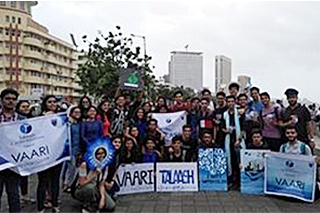
PRE-EVENT: VAARI-Every Drop Counts
Considering the ongoing water crisis, Team Talaash proudly conducted its very first Pre-Event for the year 2019, “VAARI – Every Drop Counts”, dedicating a group of approximately 200 volunteers for the same. The idea was to distribute tap caps among the people at large to promote water conservation. A tap cap is a device that reduces the flow of water through the fan equipped inside it thereby storing and saving around 7 liters of water per tap per day. The event ultimately came off as a huge success for every drop counts indeed, and Talaash sure did save a few.
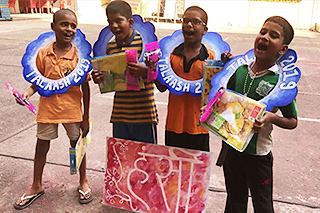
PRE-EVENT: Hasee
On Children’s Day 2019, team Talaash visited an NGO –“Our Lady’s Home” in Dadar East, Mumbai. This event was in collaboration with Navneet “YOUVA” and distributed drawing kits to underprivileged kids as a token of gift and love. The main idea was to do a little something for the community. Our organizing committee spent time with these children, conducting small activities like drawing activities, small introduction games etc. we made them feel special on that day. The team spent time with the kids whilst trying to bring out the little artist in each of them. This activity was conducted with 100 children from age group between 5 to 12 years old.
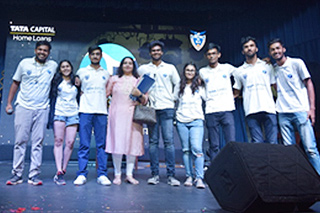
TALAASH 2019:
Talaash 2019 was the twentieth year of the legacy. It was declared open on 14th December 2019. The 3-day event was a platform for the college students of Mumbai to present themselves to everyone around and show-off their talents. This edition showcased the two-faced human personality being portrayed by the theme ‘Black Swan’. The decor was sophisticated and looked fancy with everything enveloped in black and white that brought elegance to the whole atmosphere. While on one side the ambience was so eye-catching, on the other side the events made the crowd excite a furor.
The first day, traditionally being the management day was a spur of mind-tackling activities and brain-cracking events, which ended on a light note by the Acapella performances.
The second day was the day for our flagship event, THE TREASURE HUNT. The Treasure Hunt was organised in Karnala where participants were in the Talaash of various clues, which they had to decode and then perform multiple tasks to finally win the event.
Day 3 started with a bang, the contingents were roaring and supporting their participants with maximum enthusiasm. The fashion show, dances and informal events were delightful and caused a rush of excitement to build up in one’s body.
Talaash 2019 left a golden standard this year to mark the 20th Edition.
TALAASH 2020:
Team Talaash 2020 headed by President: Shrey Vangani , awaits with pleasure to take this legacy forward.
Everyone has talent. All you need is passion. If you have passion for something, you’ll create talent. Team Talaash recently came up with 'Talent ki Talaash', a talent hunt for the youth with not just nationwide participation but international too. There have been 80+ registrations and talents varying from dance to music to literature. The event has been spread out across a span of a month, with 3 rounds.
The best is yet to come, Team Talaash 2020 is all set to host numerous events all around the year. Follow us on our Social Media Accounts to stay updated with the latest updates!
Instagram: @talaash_legacy
For more info visit: https://www.talaashjhc.com/
E. STUDENTS ACHIEVEMENTS:
Harsh Tekchandani |
TYBMS |
Written a IELTS Exam Guide that was a bestseller on Amazon. |
Ayush Rungta |
SYBMS |
Best Dramatist of the year - Jai Hind College'19-20 |
Ishant Jain |
SYBMS |
Was awarded best student for compliance for the year 18-19 |
Nazah Mistry |
FYBMS |
Football - I play for the club SFA India, under contract till 2021, played The Indian women’s league and qualified for the super six face off |
Piyush Talreja |
FYBMS |
Best dancer in KC Joule |
Rahil Shah |
FYBMS |
Silver Medal at Mumbai University Games (Shooting); Played Nationals and achieved renowned shot status (sport- Shooting); Qualified and played Indian Team Selection Trials (Sport - Shooting) |
Aditi Das |
SYBMS |
Been in the first 7 of the university's west zone team (west zone held in Gwalior) and was also in the first 7 of the Ashwamedh handball team and won a bronze (Ashwamedh held in Solapur) (2019-20). |
Dhruv Joshi |
FYBMS |
Assistant Contingent Leader for Kiran Joule. College stood 2nd Overall. |
Pushti Khatri |
FYBMS |
Secured zonal level in ICSO (International Company Secretary Olympiad) Examination 2019 |
Rhea Patel |
TYBMS |
Acceptance from Babson College, USA for Postgraduate program. |
Kareena Singh |
SYBMS |
2019-20
1. Achiever’s award for outstanding performance in dance
2. Illenium fest : 1st In Bollywood Dance 2nd In Streets 2nd In Video Imitation
3. KIRAN (KC College) 1st In Bollywood Dance 3rd In Streets
4. PANAAH (Wilson College) 1st In “Open” Dance Category 3rd In Streets
5. SHOUTT (JaiHind College) 2nd In Dance Battle 2018-19
6. Achiever’s award for outstanding performance in dance 2018-19
7. BEST DANCER AWARD FOR JOSHH’18
8. ILLENIUM’19 2nd In Bollywood Dance
|
Sanika Ranavde |
TYBMS |
1. Awarded for Outstanding Performance and Achievement in Dance- Achievers’ Night 2019
2. Panaah 2020 • 1st place in Bollywood Dance
3. Kiran 2019 • 1st place in Bollywood Dance
4. Illenium 2020 • 1st place in Bollywood Dance • 2nd place in Video Imitation Event
5. Waves BITS PILANI Goa,2019 • 3rd place in National Level Group Dance
6. Adorea 2019 • 1st place in Group Dance
7. Illenium 2019 • 2nd place in Bollwood Dance
8. Yountre 2019 • 2nd place in Fashion show
9. Joshh 2019 • 2nd place in Western dance
|
Kalyani Jagadhane |
FYBMS |
Secured 1st and 3rd position at Kishinchand Chellaram College's 'May Marathi' intercollegiate event |
Raunak Agrawal |
SYBMS |
3rd position in National level Asian Parliamentary debate, Incubatee of Jai Hind Incubator, Winner of all major debates in Mumbai Collegiate circuit including colleges like NM, Mithibai, Hinduja, Wilson, Podar to name a few. Also youngest panellist alongside CBSE's ex director at GCEC commerce conclave. |
Abhishek Wadhwani |
TYBMS |
Won music competitions at various colleges and performed at 15+ places in Mumbai. |
Arpit Daga |
FYBMS |
Volunteer program at Rotary Club, Ishanya to deliver help packages to the underprivileged during lockdown. |
Lavisha Chhabria |
SYBMS |
Placed 3rd in Research Paper Competition. |
Manjari Mansinghka |
FYBMS |
(i) Stood 2nd in presentation competition at KC College Fest.
(ii) Cleared CS Foundation in first attempt. |
Shloka Sajdeh |
FYBMS |
• Bombay City - heptathlon direct selection for state meet and Javelin Gold
• Maharashtra Athletic state junior meet - Heptathlon - Bronze, Javelin – Bronze
• Reliance Youth Games Mumbai Division - hurdles/ high jump - Gold, Javelin – Silver
• Inter collegiate University games - Javelin 4th place
• YMCA State level meet - high jump - Gold, Hurdles/ shot put – Bronze
• Reliance youth games - selected for 100 mtrs hurdles for nationals - 6th place
|
Piyush Talreja |
|
• Came 2nd in Sydenham College as ACL
• Won the Best Dancer award in KC College’s fest Joule
|
Students’ Special Achievements
Upamanyu Acharya: Upamanyu has realised his dream of doing his MBA from India's foremost management institute, by joining the 56th MBA PGP batch of IIM Ahmedabad. Starting his own company, Fynestuff, in his second year of BMS (2015-2018 batch), he gained 1 million users on his website through utilising digital marketing techniques, and became an influencer in the block chain world. He represented Jai Hind College at the world’s largest undergraduate case study competition in Hong Kong and was instrumental in taking the Case Study Cohort to the next league.
- Extracurricular: “Talaash” is one of the most significant part of the BMS programme which is an inter-collegiate Management festival organized by the BMS students.